From an experiment
to a million
From an engineering experiment to the millionth Escort TD-BLE
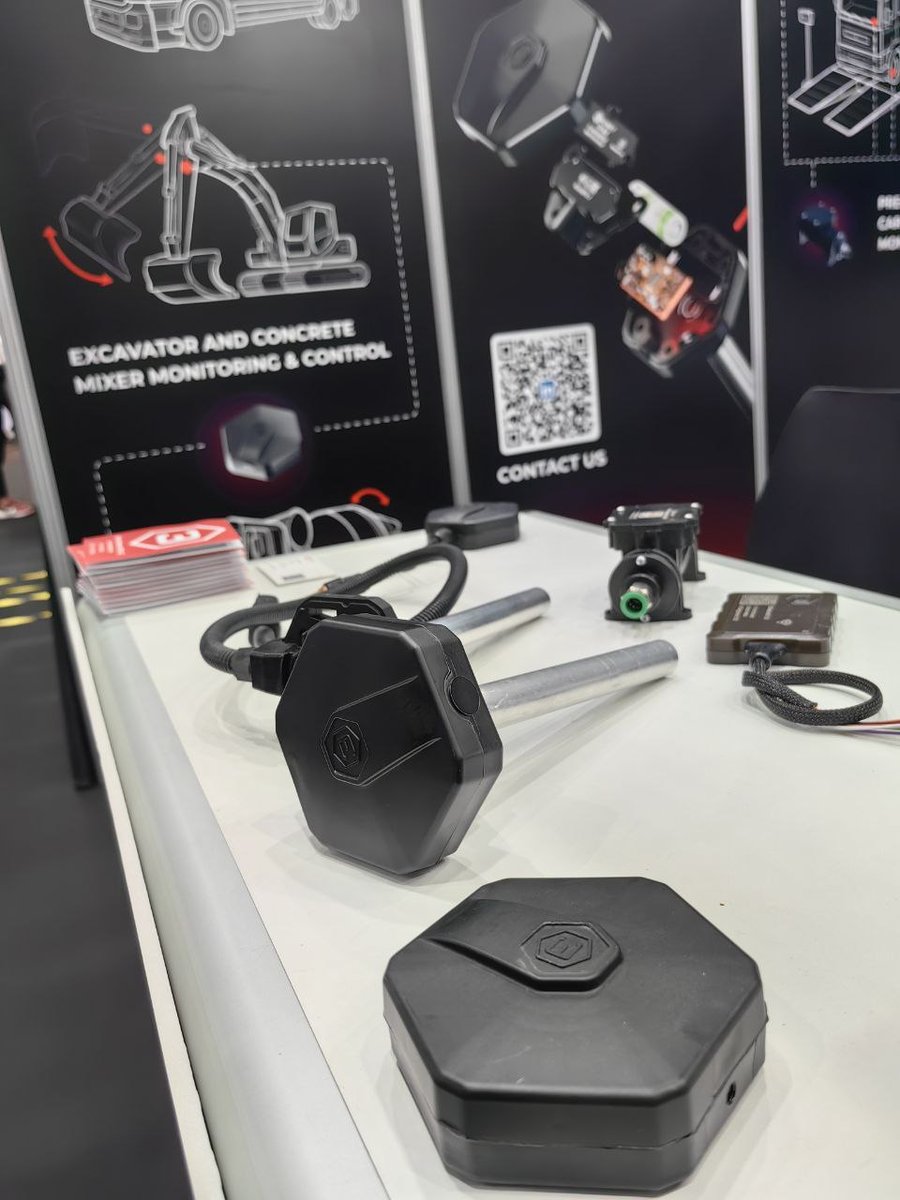
Today Escort is preparing to release its millionth TD-BLE. Behind that number is the story of a technology that began with a small engineering team and the wish to solve a problem every installer knew well.
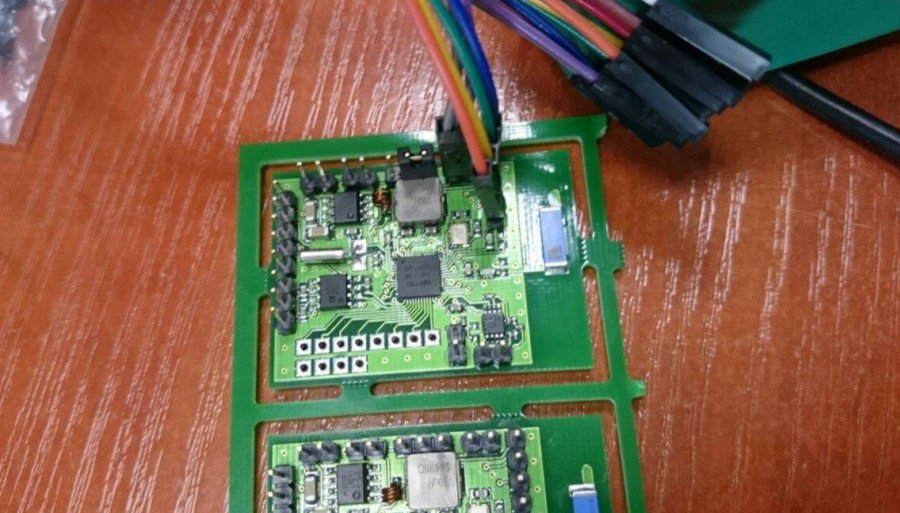
In 2017 the work on the future sensor wasn't yet seen as a big project. A young engineer, recently arrived as an intern, was asked to explore Bluetooth Low Energy and try to build a new device on it. The design office was then about five people.
It started with simple examples on dev boards. BLE proved a promising alternative to the Zigbee used at the time — lower power draw, less operational complexity. Step by step, the experiment grew into a solution that reshaped the whole fuel-monitoring market.
Cutting the wires
The idea of a wireless sensor didn't come from nowhere. By then Escort had produced wired fuel-level sensors in series for years and understood both the measuring technology and the real headaches of installation.
Every sensor needed a cable run for power and data. That took time, and the wires stayed vulnerable — easily damaged during operation, installation or repairs.
As we put it internally:
Running wires during a sensor install is no fun at all. Going wireless was the right call — from both an engineering and a business point of view.
The international market confirmed the idea. After talks with TomTom, a major navigation-equipment maker, the Escort team got a clear signal: the partner would only consider integrating a fuel sensor in a wireless form.
For the foundation they chose Bluetooth — a widespread, standardised technology familiar to telematics makers. Yet for industrial tasks like this, BLE was hardly used at the time.
The simplicity that became a strength
For data transfer the Escort team built its own protocol, based on broadcast messages in the manufacturer data field. That let readings reach a tracker or a base without a constant connection to the sensor.
At first the solution seemed too simple. Later, that very simplicity became its main advantage: the protocol was extensible, so the sensor's features could grow without breaking the system already built.
As we say internally:
Simplicity turned out to be our strong suit. We could add new capabilities without breaking anything.
Over time Escort's approach spread widely. GPS-tracker makers began to support it, and some solutions were even copied by competitors.
If they copy it — that means we made the right technological call.
So the protocol went far beyond the company and effectively became an industry standard.
The first prototype and the battery hunt
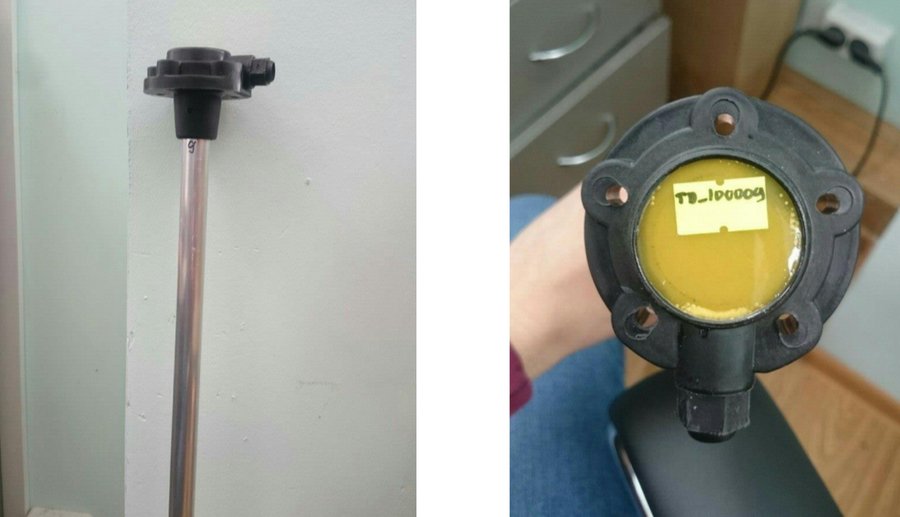
The first prototype of the future TD-BLE looked nothing like the production sensor. It had a round housing and a different power source, and was tested for a long time, gradually inheriting solutions already proven on wired sensors.
The housing of the first production TD-BLE came from another product. It could be adapted to fit the battery, so no new mould was needed at the start. Later the housing was reworked several times — for design, ease of assembly, and the wear of the mould under high volumes. A separate battery compartment was added so users could replace the cell without risking the board.
The hardest part was the battery itself. It had to work reliably in hard frost and in heat, when a black fuel tank in the sun can reach 70 °C. Most battery devices aren't rated for around −50 °C, and no off-the-shelf solution covered the whole range. The team studied manufacturers around the world and tested many cells before finding the right one.
The first industrial BLE solution
In 2018 Escort introduced TD-BLE — the market's first wireless capacitive fuel-level sensor based on Bluetooth Low Energy.
Until then BLE was used mainly in consumer devices. Escort was the first to believe the technology suited industrial equipment that demands high accuracy, reliability and stable battery operation in tough conditions. The novelty lay in applying BLE to fuel monitoring at all, in pairing wireless with battery power, and in the data protocol they developed.
But releasing the sensor was not enough on its own — the market and technology partners needed time to appreciate the new approach.
Why the result is hard to repeat
The principle of fuel-level measurement has long been known, so from the outside it may look easy to copy. In practice, few manage to make accurate, reliable sensors.
It's not a lack of information but a matter of engineering school and execution. In a device like this, every detail matters — even a small mistake can reduce accuracy or shorten the service life. And the problems often don't show up right away: a sensor can pass the first checks and work fine for a while, with the error only surfacing after a year in real conditions.
That's why building a reliable sensor takes more than assembling known components to a ready recipe. It takes series-production experience, careful engineering and long testing. Work on TD-BLE drew on years of making wired sensors — the team didn't have to reinvent the mechanical, fuel-measuring part. Development was tightly linked to production, too: engineers could quickly order a small batch, join the assembly, check the result and make changes on the spot.
As we put it internally:
The devil is in the details. Miscalculate a little and the accuracy falls short, the device unreliable. You could say luck was on our side — but luck favours the prepared.
TD-BLE kept evolving after launch. Housing and battery changed; electronics, assembly and software improved. Behind every visible update were countless small refinements that accuracy, reliability and usability depended on. The developers call it "a million changes" — not because anyone literally counted them, but because a mass-market, reliable product is built from constant work on the details.
Today TD-BLE has neared a different million — the number of sensors produced. The road to that mark shows just how much a technology that began as a small engineering experiment has changed the fuel-monitoring market.