Client: National environmental monitoring authority
Project: Automated weather monitoring network across large protected natural areas
Location: Southern Africa
Overview
Protected natural areas such as national parks and nature reserves require continuous environmental monitoring to support scientific research, ecosystem conservation, and wildfire prevention.
Large protected territories often span hundreds of thousands of hectares and are located in remote regions with limited infrastructure. To improve climate monitoring and support environmental research, several protected areas deployed automated weather stations from Sokol Meteo.
The system enabled continuous monitoring of meteorological conditions across vast natural territories while significantly reducing the need for manual observations.
Challenge
Environmental monitoring in protected natural areas presents several operational challenges.
Remote and difficult-to-access locations
Nature reserves and national parks often cover vast territories located far from populated areas. Many monitoring locations lack stable mobile connectivity or access to power infrastructure.
Manual meteorological observations
Traditional weather stations used in many conservation areas require personnel to travel regularly to remote observation points to collect measurements manually.
Need for reliable scientific data
Meteorological data is essential for long-term environmental research, including climate monitoring, ecosystem studies, and biodiversity analysis.
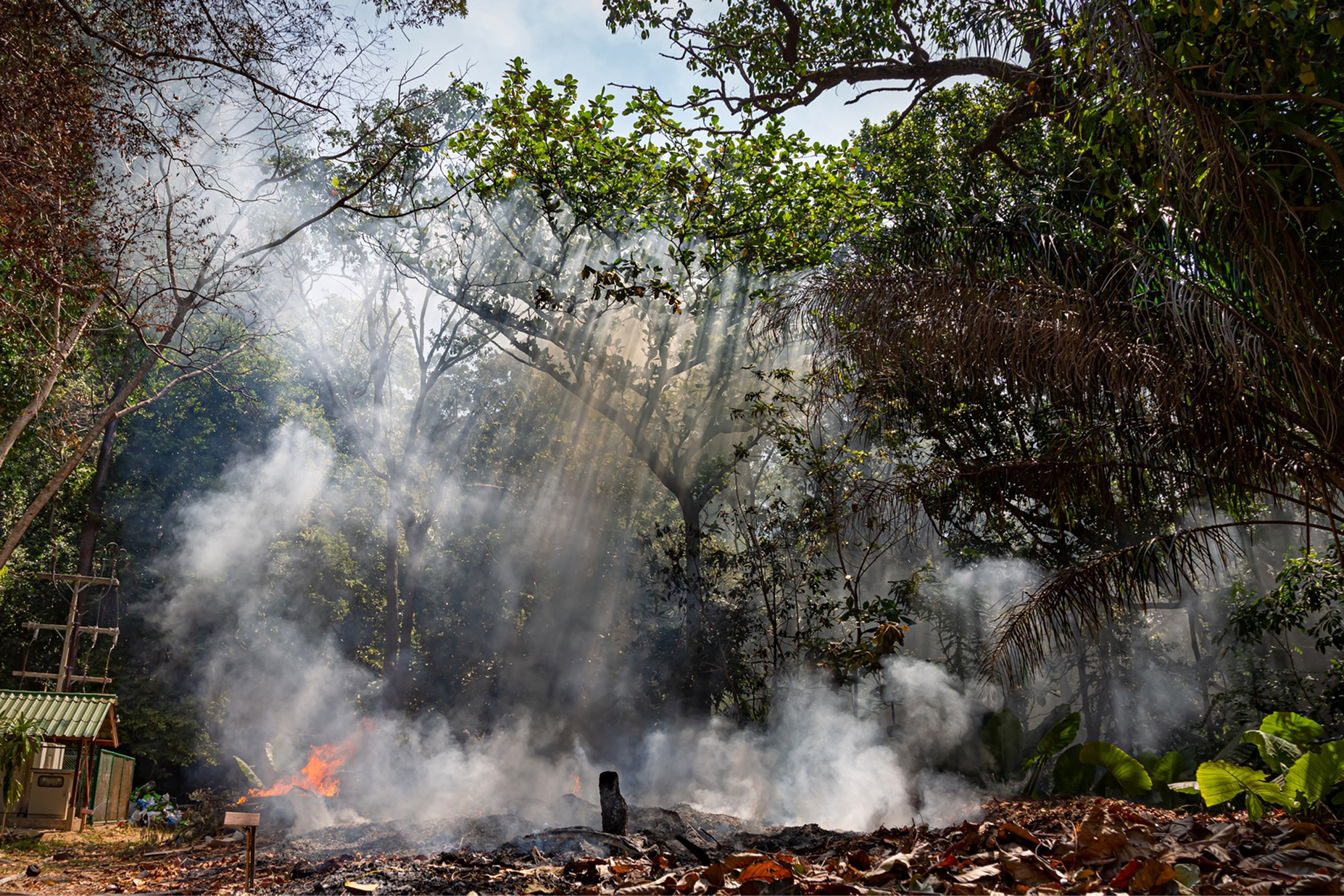
Wildfire risk management
Accurate and timely weather data plays a critical role in detecting conditions that increase wildfire risk and enabling preventive response measures.
Without automated monitoring systems, researchers and park authorities face significant delays in obtaining meteorological information needed for both scientific work and operational decision-making.
Solution
To address these challenges, several protected natural areas implemented Sokol-M1 automated weather stations designed for autonomous operation in remote environments.
The stations provide continuous monitoring of key meteorological parameters required for environmental research and ecosystem monitoring.
Key capabilities of the system include:
- real-time transmission of meteorological data
- support for multiple communication technologies including cellular and satellite connectivity
- autonomous operation without connection to electrical grids
- integration with additional sensors and monitoring devices
The weather stations are powered by solar panels and high-capacity batteries, allowing continuous operation in remote areas for extended periods.
The equipment is designed to operate reliably in harsh environmental conditions, including extreme temperature fluctuations and severe weather events.
Implementation
The weather stations were installed across several protected natural territories with varying climatic conditions and terrain characteristics.
Each station continuously records meteorological parameters and transmits data to a centralized monitoring platform.
The system includes:
- satellite and cellular communication modules for reliable data transmission
- local data storage to prevent data loss in case of temporary communication interruptions
- remote configuration and monitoring via cloud-based platforms
Through mobile applications and desktop monitoring systems, researchers and park staff can access real-time weather data and analyze environmental trends over different time periods.
Results
The deployment of automated weather stations significantly improved environmental monitoring capabilities in protected natural areas.
Key outcomes include:
- Continuous climate monitoring
Meteorological data is now collected automatically without the need for manual field observations.
- Improved wildfire risk management
Real-time weather monitoring enables park authorities to detect conditions that increase fire risk and implement preventive measures more quickly.
- Support for scientific research
The collected data contributes to long-term environmental monitoring programs and ecosystem studies.
- Remote access to environmental data
Researchers and park staff can monitor weather conditions from anywhere using mobile devices or desktop systems.
- Reliable operation in harsh environments
The autonomous power system and rugged design allow the stations to operate reliably in remote and extreme climatic conditions.
Equipment Used
Sokol-M1 Weather station